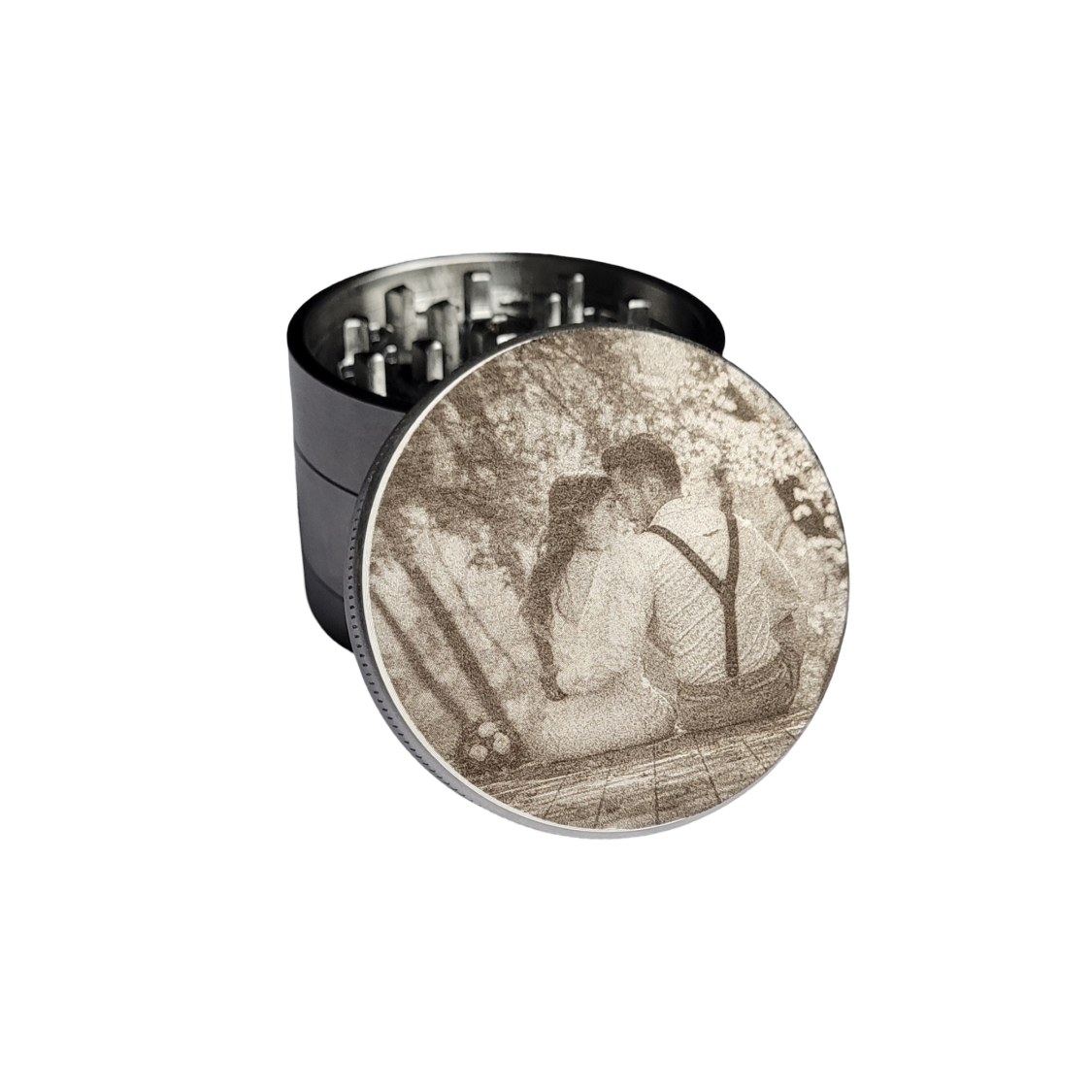
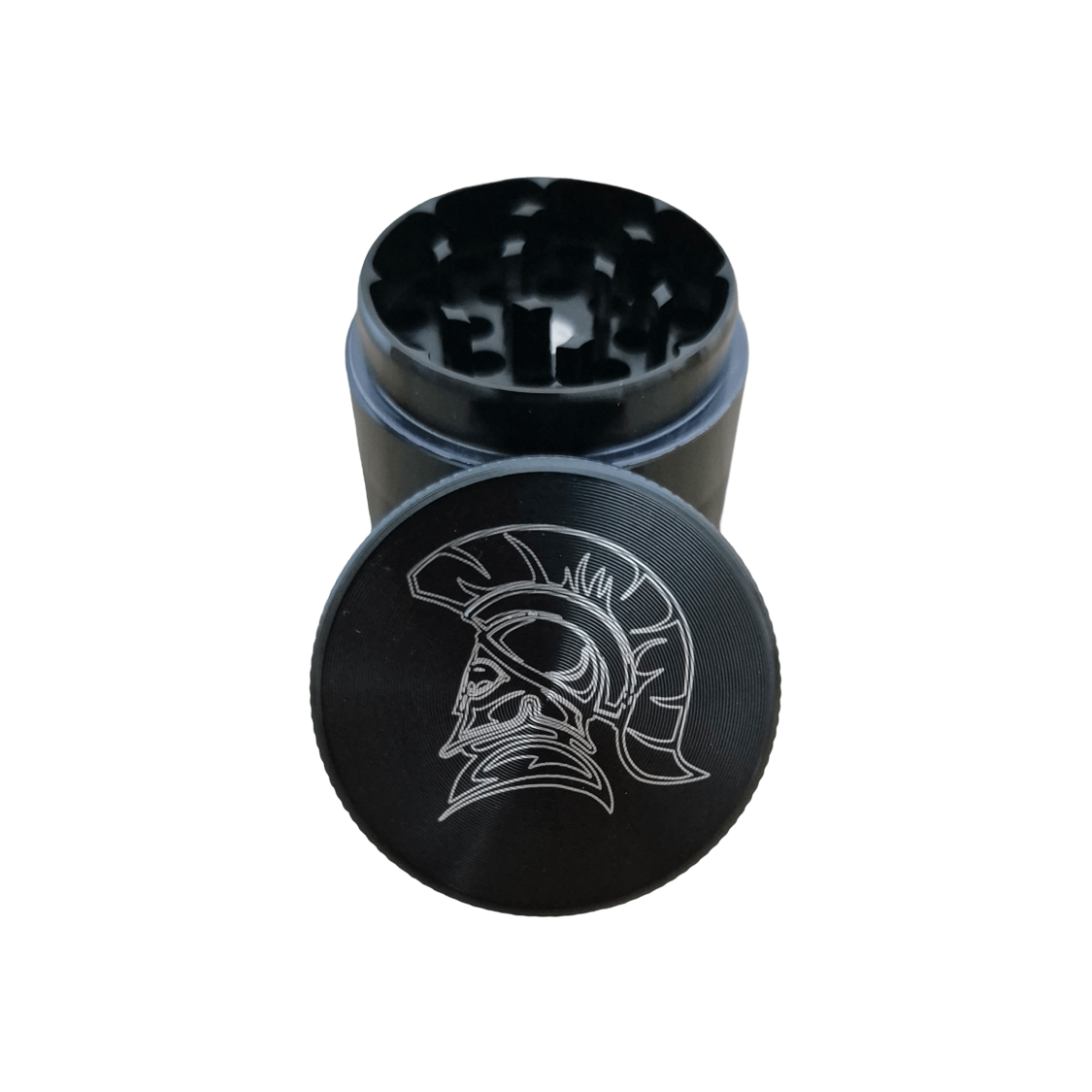
A grinder – also called a mill, crusher or herb grinder – is an accessory for finely breaking up herbs, spices or cannabis. The name comes from the English verb "to grind", meaning to mill or crush. Anyone who works regularly with dried herbs knows: the quality of the grinding mechanism makes a huge difference – not only to the result, but to the whole experience.
How does a grinder work?
The principle of a grinder is very simple, but mechanically well thought out. The grinder consists of at least two matching halves, each fitted with tooth-like projections – the so-called teeth or pins. The material to be ground is placed on the lower part, the upper part is put on top, and then you twist the two halves against each other. The shearing force between the teeth breaks the herb up evenly.
The key factor is the tooth design: diamond-shaped teeth with sharp edges cut cleanly through the material, while round or blunt teeth tend to crush it. High-quality grinders have precisely milled teeth that stay sharp even after long use.
The different types: 2-piece, 3-piece, 4-piece
Grinders come in different designs – depending on how many levels (chambers) they have. The number of chambers significantly determines what they can do.
2-piece grinder (single chamber)
The simplest type consists of just two parts: lid and base with the ring of teeth. The ground herb stays directly in the grinding area and has to be removed by hand. This variant is compact, inexpensive and uncomplicated – but less convenient for larger quantities.
3-piece grinder (with collection chamber)
Here a second chamber is added. The floor of the grinding area is perforated: the finished ground material falls through the holes into a separate collection chamber. The result is more even, because only material that is fine enough falls through. Coarser pieces stay at the top and continue to be broken down.
4-piece grinder (with pollen catcher)
The 4-piece is the most popular type among experienced users. It adds a third chamber, separated from the collection chamber by a fine screen (mesh). The finest powder – known as kief or pollen – falls through this screen into the bottom container. Kief is particularly rich in active compounds and can be used separately or mixed into the ground herb. Most high-quality grinders on the market are 4-piece.
Materials compared
The choice of material is one of the most important criteria when buying a grinder, as it directly affects durability, taste and hygiene.
Plastic (acrylic)
Plastic grinders are the cheapest on the market and are fine as a starter or for occasional use. However, the teeth wear quickly, plastic particles can get into the material, and the grinders are hard to clean thoroughly. They are not recommended for continuous use.
Aluminium (anodised)
Aluminium is the standard in the mid-price range. Anodised aluminium grinders are light, robust and usually precisely milled. The surface is sealed by the anodising process, which prevents oxidation. With cheap aluminium grinders, check the quality of the anodising – inferior coatings can wear off and leave traces in the ground material.
Stainless steel
Stainless steel grinders are the highest-quality and most durable option. Stainless steel is rust-free, taste-neutral, food-safe and extremely resistant. The teeth stay sharp permanently, the material can be cleaned without leaving residue, and there's no risk whatsoever of abrasion or coating wear. For regular users, a stainless steel grinder is the best long-term investment.
Wood and titanium
Wooden grinders are aesthetically appealing and often handmade, but are harder to clean and less durable. Titanium grinders are extremely light and resistant, but rare and expensive – they are often milled from titanium alloys.
Sizes and what they mean
Grinders come in various diameters, typically from around 30 mm to 100 mm. The size determines how much material can be processed at once.
Small grinders (30–45 mm) are very compact and ideal for on the go. However, they hold less material and can clog more quickly with coarse herbs. Medium-sized models (50–63 mm) are the sweet spot for most users – enough capacity to work comfortably, but still handy. Large grinders (70 mm and above) are suitable for heavy users or for preparing larger quantities at once, but are less practical for everyday use in your pocket.